For engineering teams
Making AI work when the demo is over.
I help teams design, evaluate, and productionize AI systems — particularly agentic workflows, RAG, evaluation infrastructure, and Responsible AI readiness.
Salt Lake City, Utah Engineering & research
Building and studying AI systems for the real world.
AI Systems Engineer · Researcher · MS CS @ U of U
I'm Victoria Doyon — an AI systems engineer and M.S. Computer Science student working across agentic AI, retrieval, evaluation, and production ML systems. My work sits at the intersection of building AI that works in the real world and studying how we can make intelligent systems more reliable, understandable, and capable.
Making AI work when the demo is over.
I help teams design, evaluate, and productionize AI systems — particularly agentic workflows, RAG, evaluation infrastructure, and Responsible AI readiness.
To me, these aren't separate interests. Better research informs better systems, and production systems expose the questions worth researching.
Understanding how we can make AI better.
I'm interested in ethical and interpretable AI informed by neuroscience: whether new or existing AI and machine learning mechanisms can be created or improved by analyzing principles and behaviors of human cognition and neurobiology.
I work on the parts of systems where model behavior meets software engineering: retrieval, agents, evaluation, infrastructure, and the safeguards that make them dependable.
Focus area
Testing how agentic systems behave, where they fail, and whether they can be trusted outside controlled demos.
Related researchFocus area
Designing retrieval systems that give models the right information at the right time — and measuring whether that grounding actually improves the result.
Related researchFocus area
Taking AI capabilities from prototype to production through scalable architecture, deployment, testing, security, and operational readiness.
Experience
2026 — Present
Program Assistant (CHPC)
Responsible AI · AI infrastructure · Security & guardrails · LLM inference · Research Support · HPC
Experience
2024 — 2026
Software Engineer II
Agentic AI · RAG & AI Search · Responsible AI · AI infrastructure · Production Reliability
Related experienceExperience
2022 — 2024
Software Engineer
Full-stack systems · Anomaly Detection · Cloud Infrastructure · Security · Operational Engineering
Related experienceExperience
2021 — 2022
Engineer
Conversational AI · NLP · Transformer Experimentation · Full-stack Development
Research interest
Evaluation, reasoning, tool use, failure modes, reliability
Related focus areaResearch interest
Grounded generation, information retrieval, language understanding
Related focus areaResearch interest
Whether AI/ML mechanisms can be created or improved by analyzing principles and behaviors of human cognition and neurobiology
Research interest
Interpretability, transparency, safety, provenance, responsible deployment
Publication
My first published research project explored machine-learning-based autonomous driving in a photo-realistic simulation environment, connecting steering prediction models with MATLAB and Unreal Engine.
Read publication (opens in a new tab)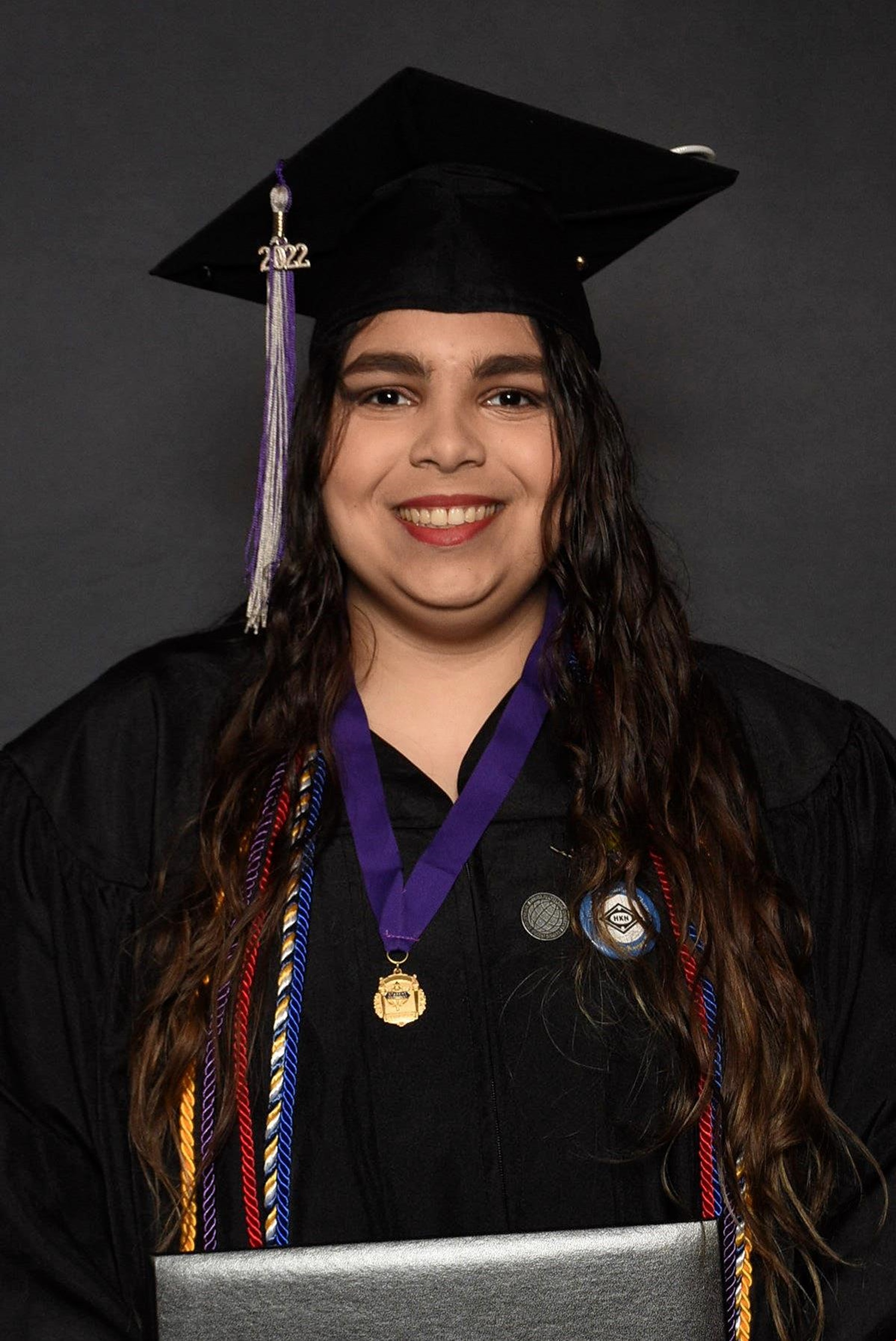
I got interested in artificial intelligence by first being interested in human intelligence.
Before I discovered programming and robotics, I planned to study neurology. The career path changed, but the question didn't: what can understanding the way humans think and learn teach us about building intelligent systems?
That curiosity eventually took me from computer engineering into conversational AI and NLP, then into several years of production software engineering at Microsoft, where my work increasingly focused on retrieval, AI infrastructure, agentic systems, evaluation, reliability, and Responsible AI.
Today, I'm pursuing an M.S. in Computer Science at the University of Utah, researching ethical and interpretable AI informed by neuroscience, and asking whether what we know about human cognition and neurobiology can improve how we build AI. I also continue to build AI infrastructure at the university's Center for High Performance Computing.
I tend to gravitate toward messy problems: systems that cross boundaries, models whose failures aren't obvious, and technical questions that require understanding both how something works and why it behaves the way it does.
Outside the technical work, I care a lot about teaching, mentorship, and making technical communities more welcoming — things I've been involved in throughout both university and industry.
B.S. Computer Engineering (Machine Intelligence) - Florida Polytechnic University
M.S. Computer Science - University of Utah